
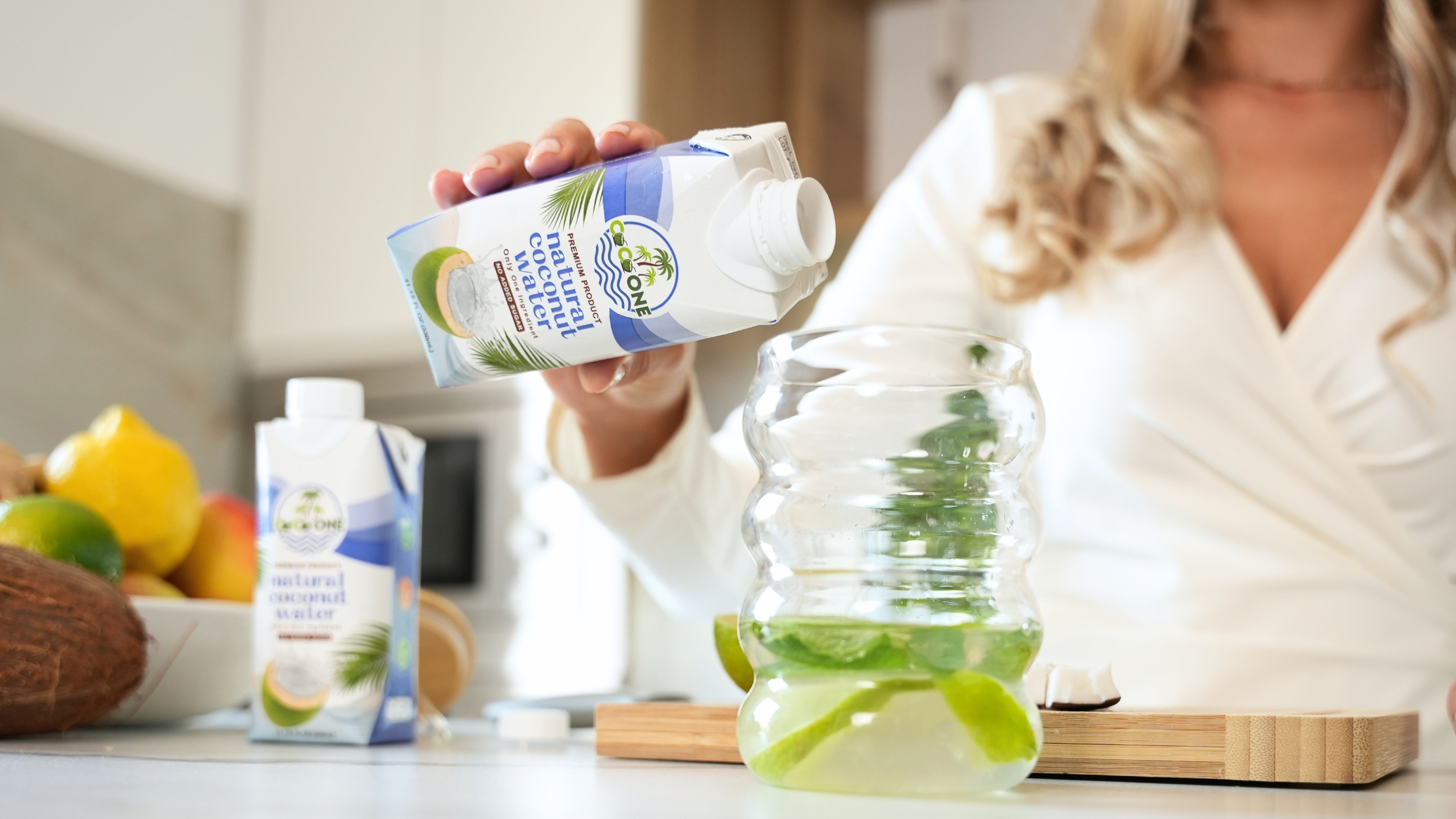
There's a reason coconut water has been consumed for centuries across tropical regions — long before it became a wellness trend. It comes straight from the fruit, requires no processing, and delivers exactly what your body needs. No lab. No additives. Just nature doing its job.
But not all coconut water is the same. The source matters. The method matters. And once you understand the difference, you'll never look at a carton of "coconut water" the same way again.
What Is Coconut Water, Really?
Coconut water is the clear liquid found inside young, green coconuts — typically harvested between 6 and 9 months of maturity, before the fruit fully ripens. At this stage, the liquid is at its most abundant, lightest in flavor, and richest in electrolytes.
It is not coconut milk. It is not a juice. It's the pure, natural water the coconut tree produces to nourish its own fruit — and it happens to be one of the most naturally balanced hydration sources on earth.
The Electrolyte Advantage
What makes coconut water genuinely special isn't marketing — it's chemistry. Coconut water contains a natural balance of:
- Potassium — one of the most important electrolytes for muscle function and hydration, found in coconut water at levels that rival a banana
- Magnesium — supports energy metabolism and muscle recovery
- Calcium — essential for bone health and cellular function
- Sodium — helps regulate fluid balance
- Phosphorus — supports cellular energy production
This electrolyte profile is remarkably close to the body's own fluid composition, which is why coconut water has historically been used in emergency rehydration situations and why athletes have adopted it as a natural alternative to synthetic sports drinks.
Fresh vs. From Concentrate: Why It Matters
Walk into any supermarket and you'll find dozens of coconut water options. Most of them share a common problem: they're made from concentrate, blended from multiple coconut sources, or have sugar added to standardize the flavor.
Here's why that matters:
When coconut water is concentrated — heated, reduced, then reconstituted with water — it loses volatile compounds that carry its fresh, delicate flavor. The result is a product that tastes "coconutty" in an artificial, one-dimensional way. Brands then compensate with added sugars or natural flavors.
Fresh, never-from-concentrate coconut water tastes completely different. It's lighter. Subtly sweet. Clean on the palate, with none of the heaviness that processed versions carry. Single-origin products — sourced from one region rather than blended from multiple farms — go even further, offering consistency and traceability that blended products simply can't match.
Vietnamese Coconuts: Why the Origin Matters
Young Vietnamese coconuts are among the most prized in the world for their water content and flavor profile. Vietnam's tropical climate, rich soil, and traditional harvesting methods produce coconuts with a notably lighter, more delicate taste and naturally higher electrolyte concentration compared to coconuts from other regions.
The difference isn't subtle. Side by side, water from a young Vietnamese coconut has a cleaner, fresher character — one that doesn't need enhancement to taste good.
How to Make the Most of Coconut Water
Coconut water is best consumed fresh or cold, without added sugars or flavorings interfering. Here are a few ways to incorporate it into your daily routine:
Post-workout recovery — The natural electrolyte balance makes coconut water an excellent rehydration drink after exercise. It replenishes what you lose without the artificial dyes and sugar load of most sports drinks.
Morning hydration — Starting your day with coconut water before coffee helps rehydrate the body after sleep and gives you a gentle potassium boost before the day begins.
Smoothie base — Swap still water or juice for coconut water in smoothies. It adds a mild sweetness and boosts the nutritional profile without adding refined sugars.
Digestive support — Coconut water has been used traditionally to soothe the digestive system. Its natural composition is gentle on the stomach, making it a good choice when you're feeling off.
Cooking — Use it in place of water or stock in rice, soups, or sauces for a subtle depth of flavor.
What to Look for on the Label
When choosing a coconut water, the label tells you everything:
- Single ingredient: The only ingredient should be coconut water
- Not from concentrate: This should be explicitly stated
- No added sugars: Coconut water is naturally sweet — if sugar is on the ingredient list, walk away
- Single origin: Ideally, you know where the coconuts came from
- No preservatives or artificial flavors: These have no place in a clean product
The Bottom Line
Coconut water is one of the few products that is genuinely as good as its reputation — but only when it's the real thing. Fresh, single-origin, never from concentrate, with nothing added and nothing taken away.
At CocoOne, we source exclusively from young Vietnamese coconuts, harvested at peak freshness, and bottled without shortcuts. One ingredient. Clean label. Honest hydration.
That's what coconut water was always meant to be.
Share:
Coconut Milk: The Dairy-Free Staple You've Been Getting Wrong
The Coconut: One Fruit, Remarkable Benefits