
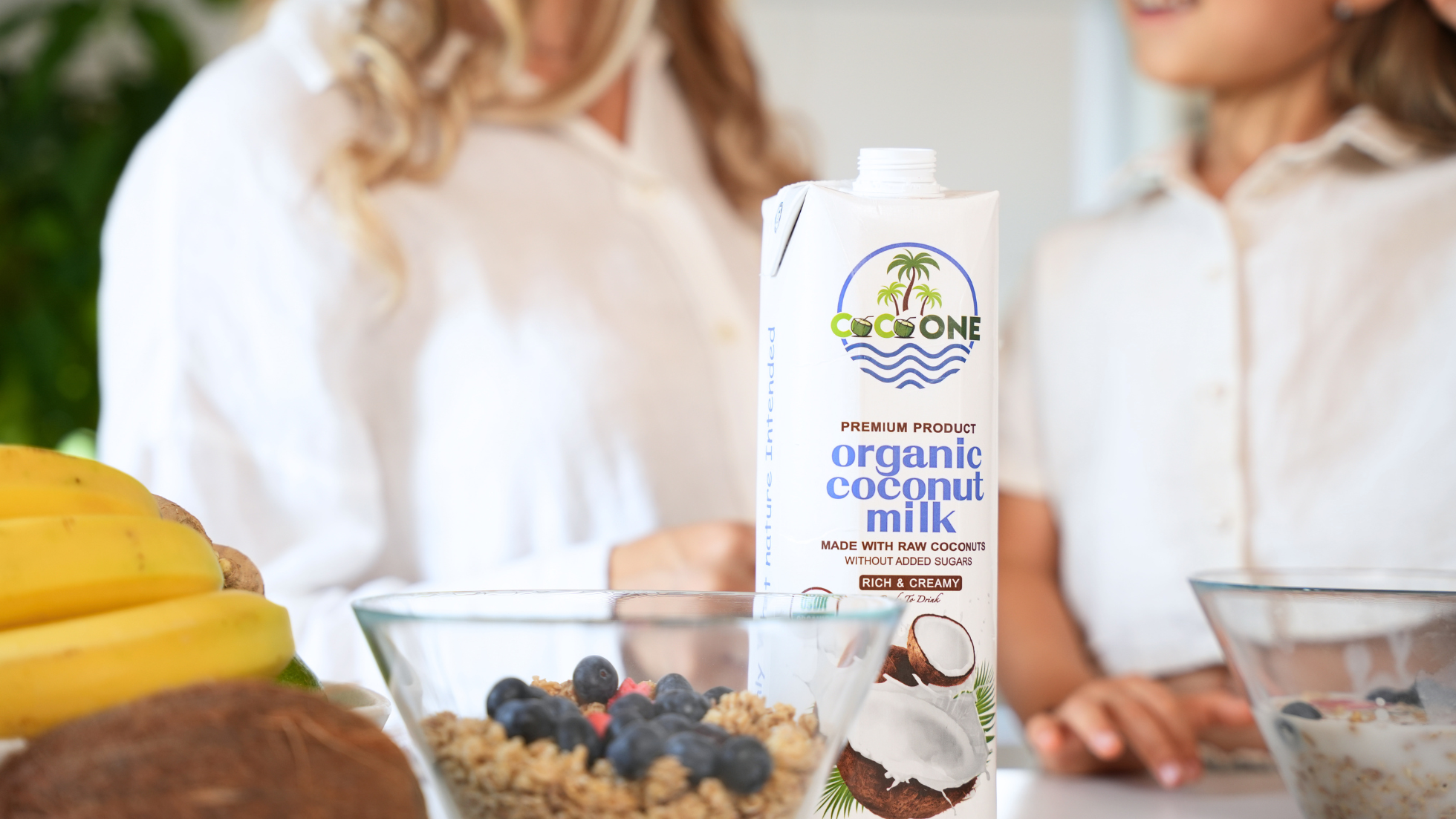
Coconut milk has earned its place in kitchens around the world — from Thai curries to morning smoothies to barista-style coffee. But the version sitting on most supermarket shelves barely resembles what coconut milk is supposed to be.
Thickeners. Stabilizers. Added oils. Gums. Preservatives. A product that lists "coconut extract" as one of eight ingredients and calls itself coconut milk.
Understanding what real coconut milk looks like — and why it matters — changes how you cook, how you drink, and how you feel about what you're putting in your body.
What Coconut Milk Actually Is
Coconut milk is made by blending the white flesh of a mature coconut with water, then pressing it to extract a rich, creamy liquid. That's it. The fat content comes naturally from the coconut meat itself — concentrated, smooth, and full of flavor.
The result is a thick, ivory-white liquid that's naturally rich, mildly sweet, and deeply satisfying. No dairy. No grains. No added sugar required.
The higher the concentration of real coconut meat, the better the product. A quality coconut milk should list coconut as the dominant ingredient — not water padded out with stabilizers to fake creaminess.
Why Most Coconut Milks on the Market Fall Short
The coconut milk category has a transparency problem. Many products use a minimal amount of actual coconut — often as low as 10–20% — and rely on added thickeners, emulsifiers, and gums to create the appearance of creaminess. Guar gum, xanthan gum, locust bean gum: these are the ingredients doing the work that real coconut should be doing.
Others add refined oils — sometimes even sunflower oil or rapeseed oil — to boost fat content and mouthfeel. The label says "coconut milk." The product tells a different story.
This matters because the nutritional profile changes dramatically. Real coconut milk contains medium-chain triglycerides (MCTs) naturally derived from coconut fat. These are the compounds that give coconut milk its metabolic properties. A product that replaces real coconut fat with vegetable oils doesn't carry the same benefits — regardless of how it's marketed.
The Nutritional Case for Real Coconut Milk
Coconut milk made from a high concentration of real coconut meat is one of the most nutrient-dense plant-based dairy alternatives available. Here's what you're actually getting:
Healthy fats (MCTs): Coconut fat is primarily composed of medium-chain triglycerides — particularly lauric acid — which are metabolized differently from long-chain fats. Rather than being stored, MCTs are processed quickly by the liver and can be used as a direct energy source. This makes real coconut milk a good option for those following low-carb, ketogenic, or whole-food diets.
No dairy, no grains: Coconut milk is naturally free from lactose, casein, gluten, and grains — making it suitable for people with dairy intolerance, lactose sensitivity, gluten sensitivity, or those following paleo or dairy-free lifestyles.
No added sugar: A clean coconut milk contains no added sugars. The mild sweetness comes naturally from the coconut itself. This makes it far more versatile than sweetened plant-based alternatives that can throw off both savory and sweet recipes.
Vitamins and minerals: Real coconut milk provides manganese, copper, phosphorus, iron, magnesium, and selenium — contributing meaningfully to daily micronutrient intake when consumed regularly.
In the Kitchen: Where Coconut Milk Excels
The beauty of high-quality coconut milk is its versatility. Because it's made from real coconut and nothing else, it behaves predictably — it doesn't separate oddly when heated, doesn't leave a gummy texture, and doesn't fight other flavors.
Coffee and lattes: A rich coconut milk foams beautifully and adds a subtle, natural sweetness to coffee without overpowering the espresso. Unlike some oat or almond milks, it doesn't require added emulsifiers to hold together in hot beverages.
Curries and soups: This is where coconut milk has been used for centuries. Thai, Indian, and Southeast Asian cuisines rely on full-fat coconut milk to build rich, complex sauces. A clean product holds up to heat, adds body, and carries spices without breaking.
Smoothies and shakes: Coconut milk adds creaminess and healthy fats to smoothies, making them more satiating without needing protein powders or added sugars to feel complete.
Baking: Coconut milk can replace dairy milk or cream in most baking recipes. It adds moisture and a faint coconut note that works beautifully in cakes, muffins, and puddings.
Overnight oats and porridge: Mixing coconut milk into oats creates a creamy, filling breakfast that sustains energy levels through the morning.
Reading the Label: What to Avoid
When choosing a coconut milk, look for:
- High coconut content — ideally 95% or above
- Short ingredient list — coconut and water should be the only ingredients
- No gums or stabilizers — guar gum, xanthan gum, and similar additives are signs of a diluted product
- No added oils — sunflower oil, rapeseed oil, or any non-coconut fat is a red flag
- No added sugar — even "organic cane sugar" doesn't belong in coconut milk
- No preservatives or artificial flavors
If the ingredient list is longer than two or three items, the coconut probably isn't doing as much work as the label suggests.
Coconut Milk vs. Coconut Cream vs. Coconut Water
These three products come from the same fruit but are very different:
Coconut water is the clear liquid inside young coconuts — light, hydrating, low in fat, rich in electrolytes.
Coconut milk is made by pressing mature coconut flesh — rich, creamy, high in natural fat, ideal for cooking and drinking.
Coconut cream is essentially coconut milk with even less water — thicker and richer, best used in desserts, cocktails, or dishes where maximum creaminess is needed.
Understanding the difference helps you use each product where it performs best.
The Bottom Line
Real coconut milk — made with a high concentration of actual coconut meat, nothing added, nothing artificial — is one of the most versatile, nutritious, and delicious plant-based ingredients in your kitchen.
At CocoOne, our milk is crafted with 99.6% real coconut. No fillers, no added oils, no stabilizers. Just what the coconut gives us, bottled with care.
Because when the ingredient is this good, it doesn't need help.
Share:
Coconut Water: Nature's Purest Hydration